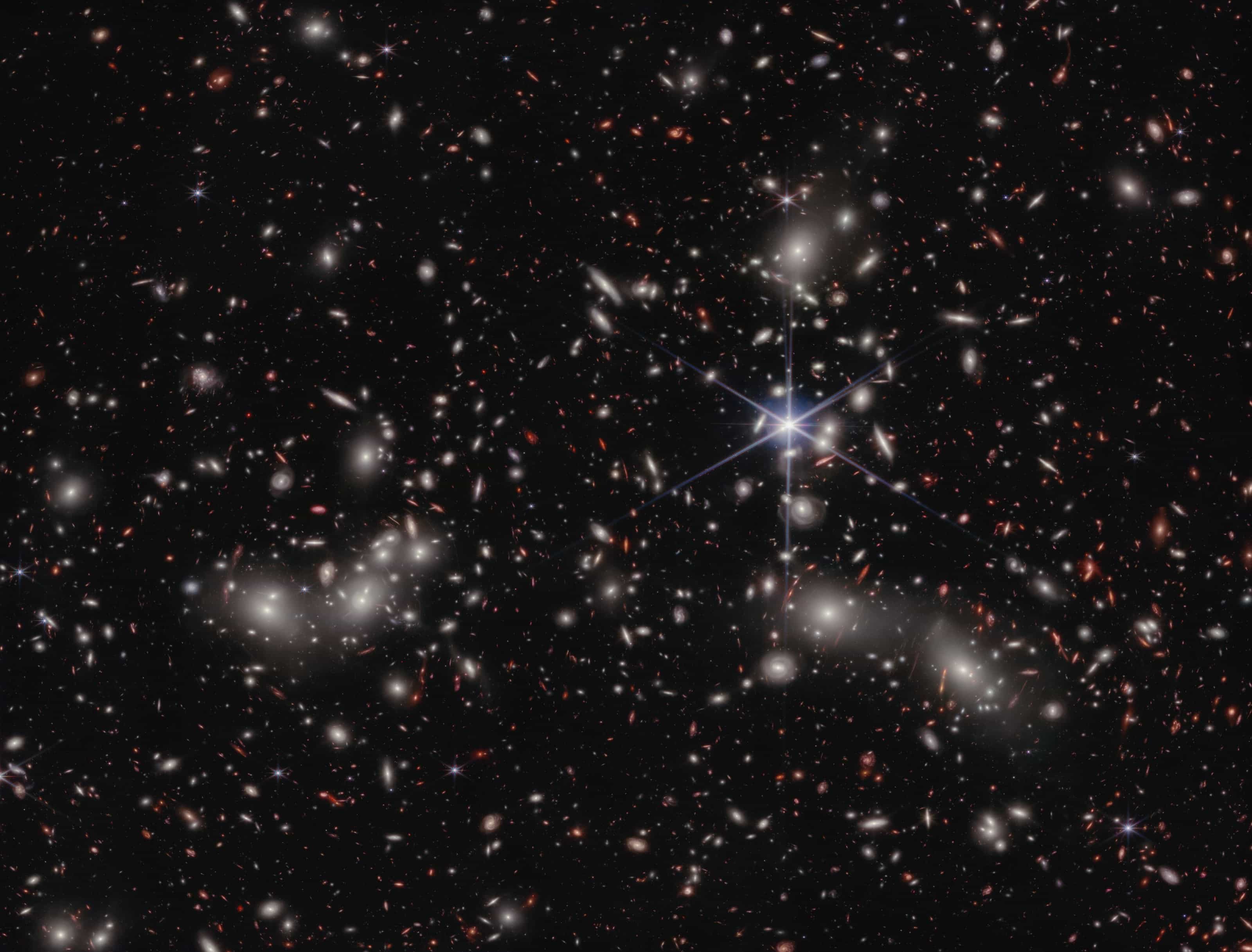
Pandora’s Cluster (Abell 2744) · Image credit: NASA, ESA, CSA, I. Labbe (Swinburne University of Technology), R. Bezanson (University of Pittsburgh), A. Pagan (STScI) · CC BY 4.0
Topic
Relativity
Space and time are not the fixed stage they seem — and your phone depends on it.
Einstein’s relativity says that time runs at different rates for clocks moving relative to each other, and for clocks at different heights in a gravitational field. These are not thought experiments: they are measured every day, by engineers who have to correct for them.
This hub explains why nothing can outrun light, what that speed limit really protects, and how satellite navigation would drift without relativity built in.
Suggested reading order
Why nothing can go faster than light
The cosmic speed limit isn’t really about light. It’s built into how space and time fit together, and breaking it would let an answer arrive before its question.
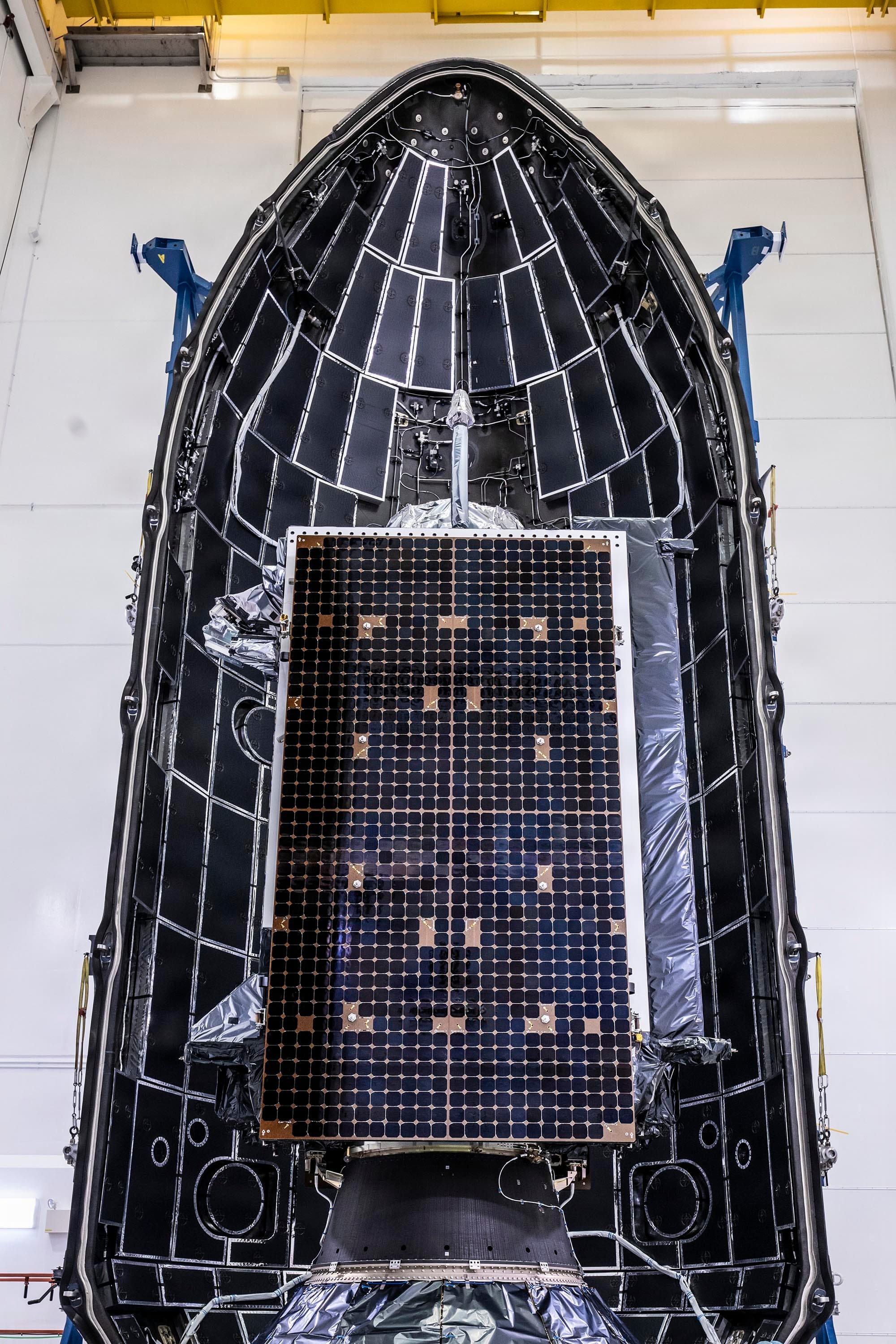
Time runs faster above your head: relativity in GPS
Clocks on GPS satellites would gain about 38.6 microseconds a day on clocks on the ground. Where that number comes from, how engineers deal with it, and what would really go wrong if they didn’t.
Quantum entanglement: what it is (and isn’t)
Distant particles give results that no instructions they carry can explain, unless something passes between them or the experiments are rigged. Fifty years of tests agree. None of it lets you send a message faster than light.
Key concepts
- speed of light
- The one speed that every observer measures to be the same, about 300,000 kilometers per second, which nothing carrying energy or information can exceed.
- time dilation
- A clock that is moving relative to you ticks more slowly than an identical clock at rest beside you.
- gravitational time dilation
- A clock sitting deeper in a gravity well, such as closer to Earth, ticks more slowly than an identical clock higher up.
- causality
- The principle that a cause always comes before its effect, for every observer.
- light cone
- The set of all places and times that a flash of light from one event could reach, or could have come from; only events inside it can affect or be affected by that event.
Other topics: Statistics of Discovery · Quantum · Cosmology · Particles & Neutrinos · Spaceflight