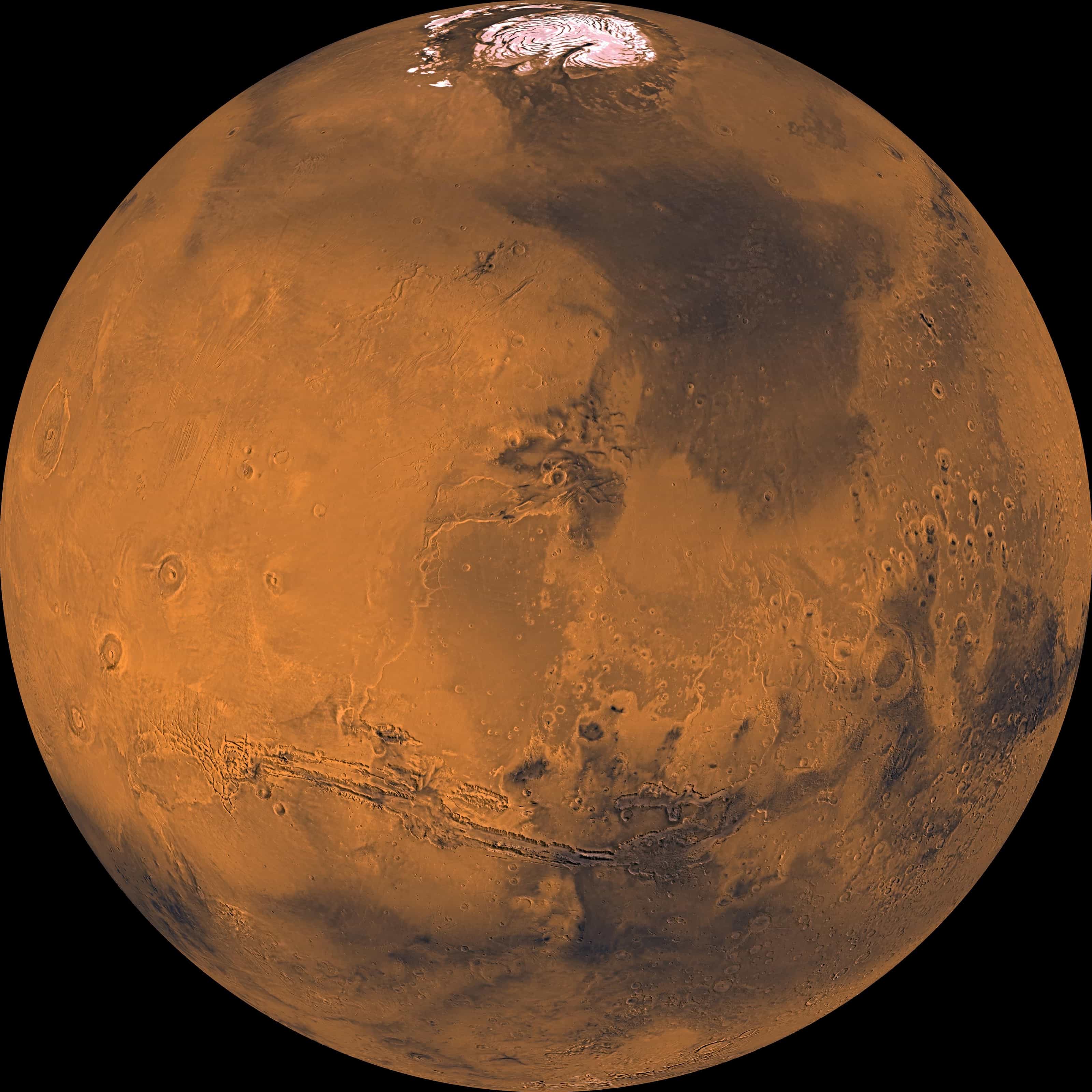
Global Color Views of Mars · Image credit: NASA/JPL/USGS · Public domain (NASA)
Topic
Spaceflight
The physics of getting there — and what happens when the arithmetic goes wrong.
Spacecraft do not fly to other planets in straight lines. They coast on carefully chosen orbits around the Sun, steered by a few precise engine burns and tracked by radio across hundreds of millions of kilometres.
This hub explains the orbital mechanics behind a trip to Mars, and the investigation into a spacecraft that was lost because two teams used different units.
Suggested reading order
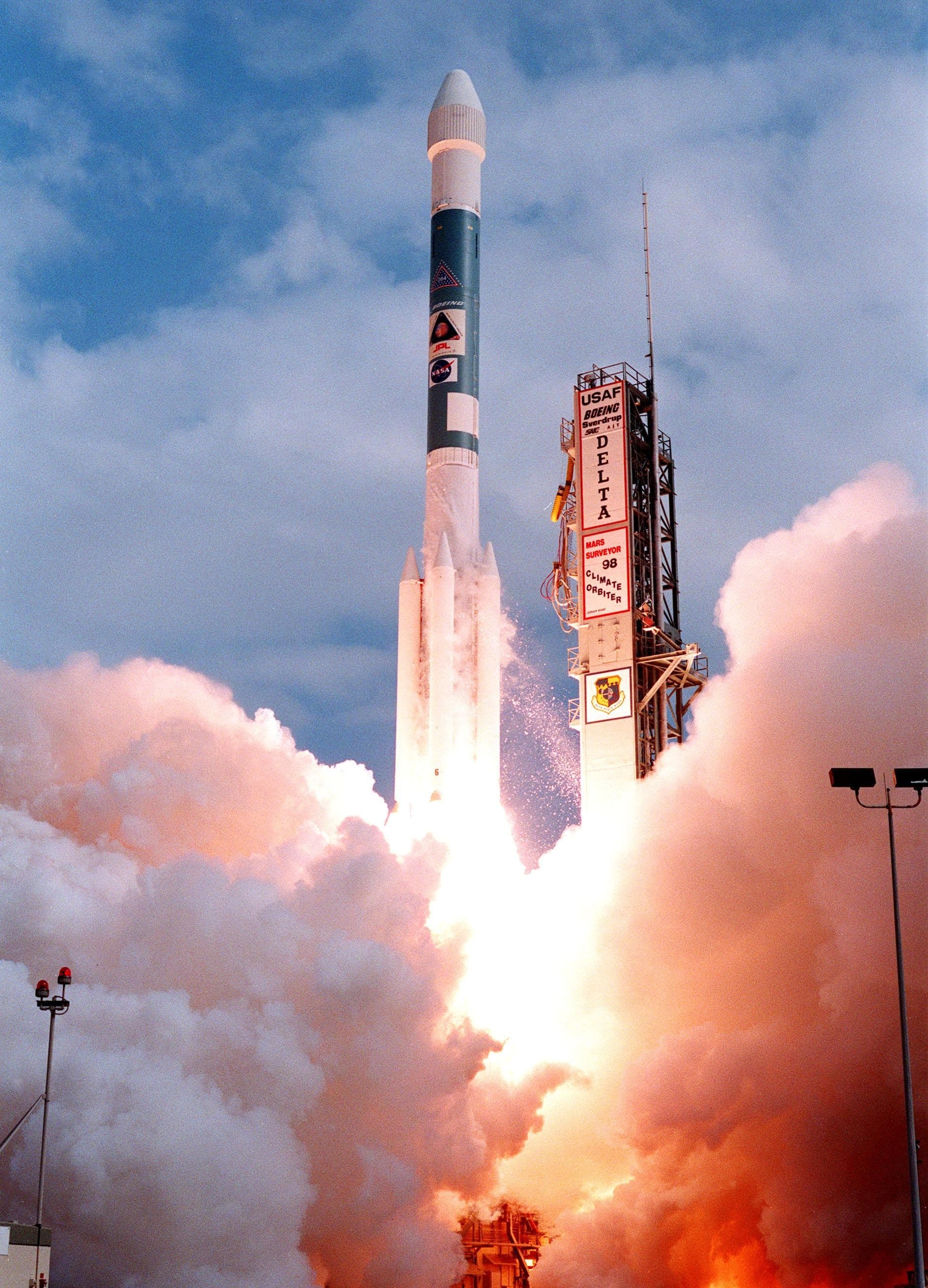
One wrong unit: how we navigate to Mars, and how we once lost a spacecraft
Reaching Mars means hitting a moving target after months of falling around the Sun. In 1999 a file of thruster data in the wrong unit, and a chain of missed chances to notice it, put a spacecraft 170 km too low.
Key concepts
- vis-viva equation
- A rule that tells you how fast something on an orbit moves at any distance from the Sun, given only the size of its orbit.
- Hohmann transfer
- The half-ellipse that just touches the orbit you start on and the orbit you want to reach: the cheapest two-burn route between them.
- orbit
- The curved path an object follows around a much heavier body, falling toward it but always moving sideways fast enough to keep missing it.
- newton-second
- The metric unit for the size of a push: a force in newtons multiplied by how many seconds it lasts.
Other topics: Statistics of Discovery · Quantum · Relativity · Cosmology · Particles & Neutrinos