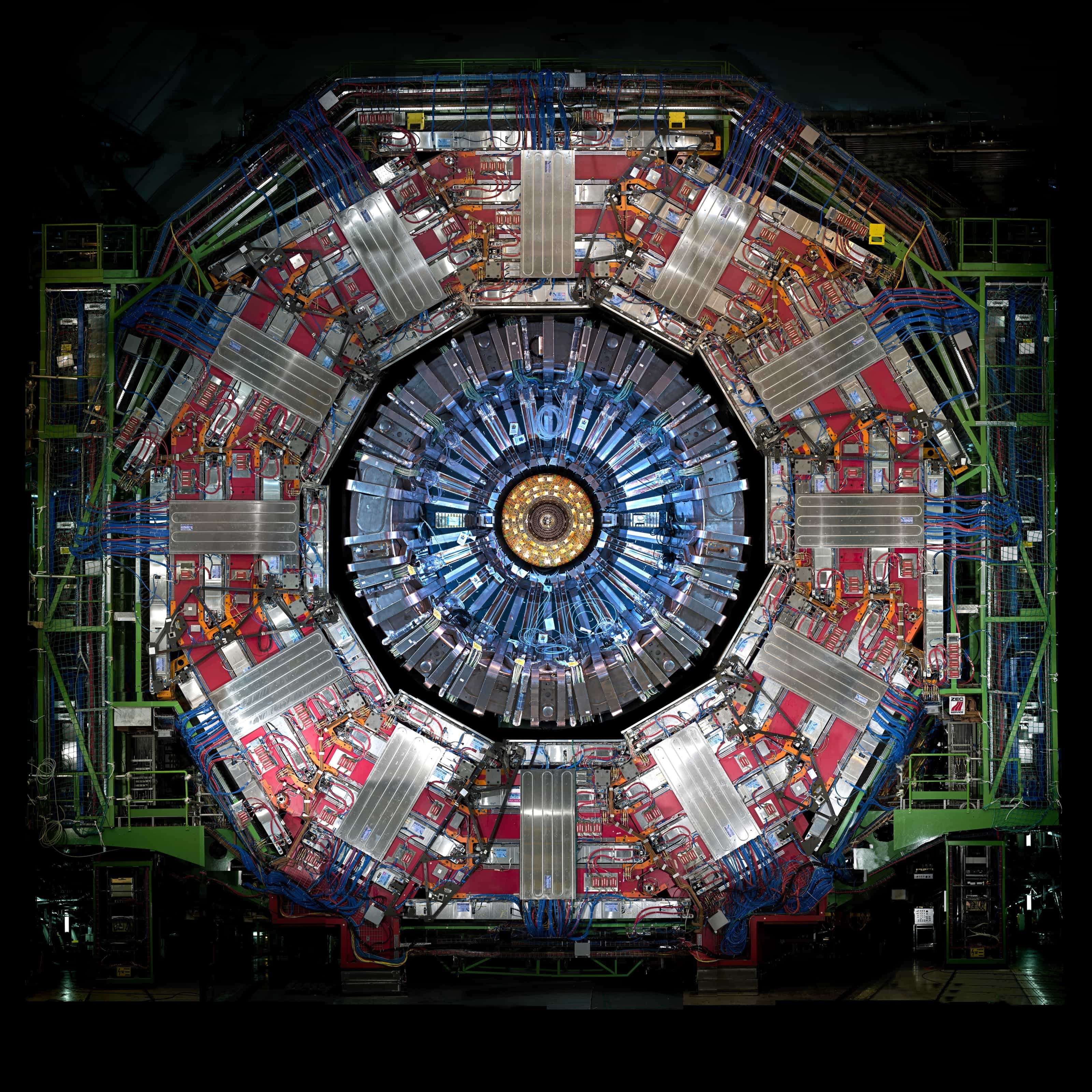
CMS experiment · Image credit: © 2008 CERN, for the benefit of the CMS Collaboration. Photo: Michael Hoch, Maximilien Brice · CC BY 4.0
Topic
Particles & Neutrinos
The ghostly particles that pass through everything — and may hold the next big surprise.
Neutrinos are the most abundant matter particles we know of, and the hardest to catch. They stream out of the Sun and through the Earth almost untouched. It took giant detectors and decades of work to show that they have mass at all.
These articles follow neutrinos from the core of the Sun to the largest maps of the universe, where a new tension has appeared between what particle physics requires and what cosmology seems to allow.
Suggested reading order
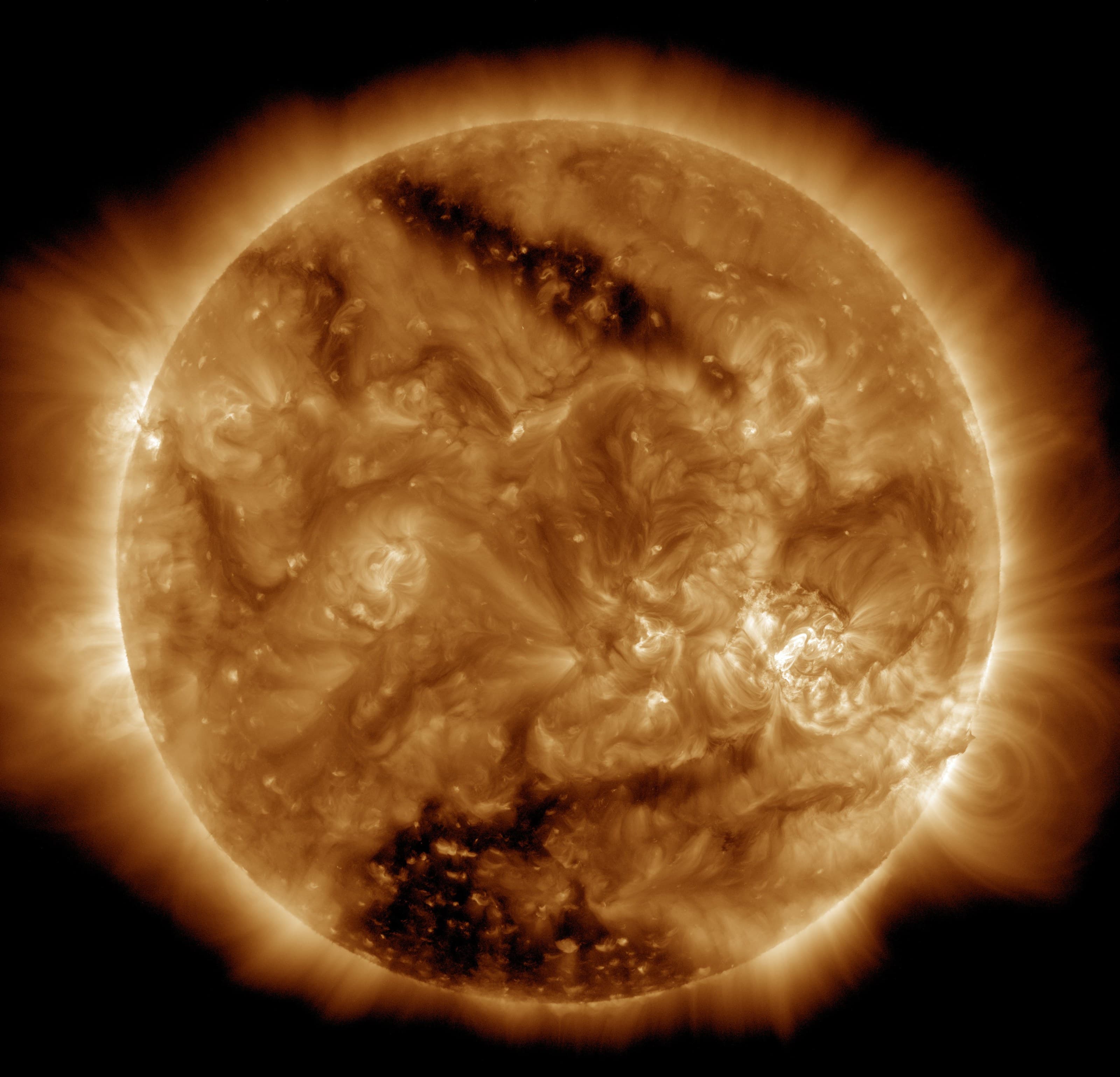
Ghost particles: the neutrinos passing through you right now
Every second, tens of billions of neutrinos from the Sun cross each square centimeter of you, by day and by night. Here is how we know, and why it took a thirty-year puzzle to understand them.
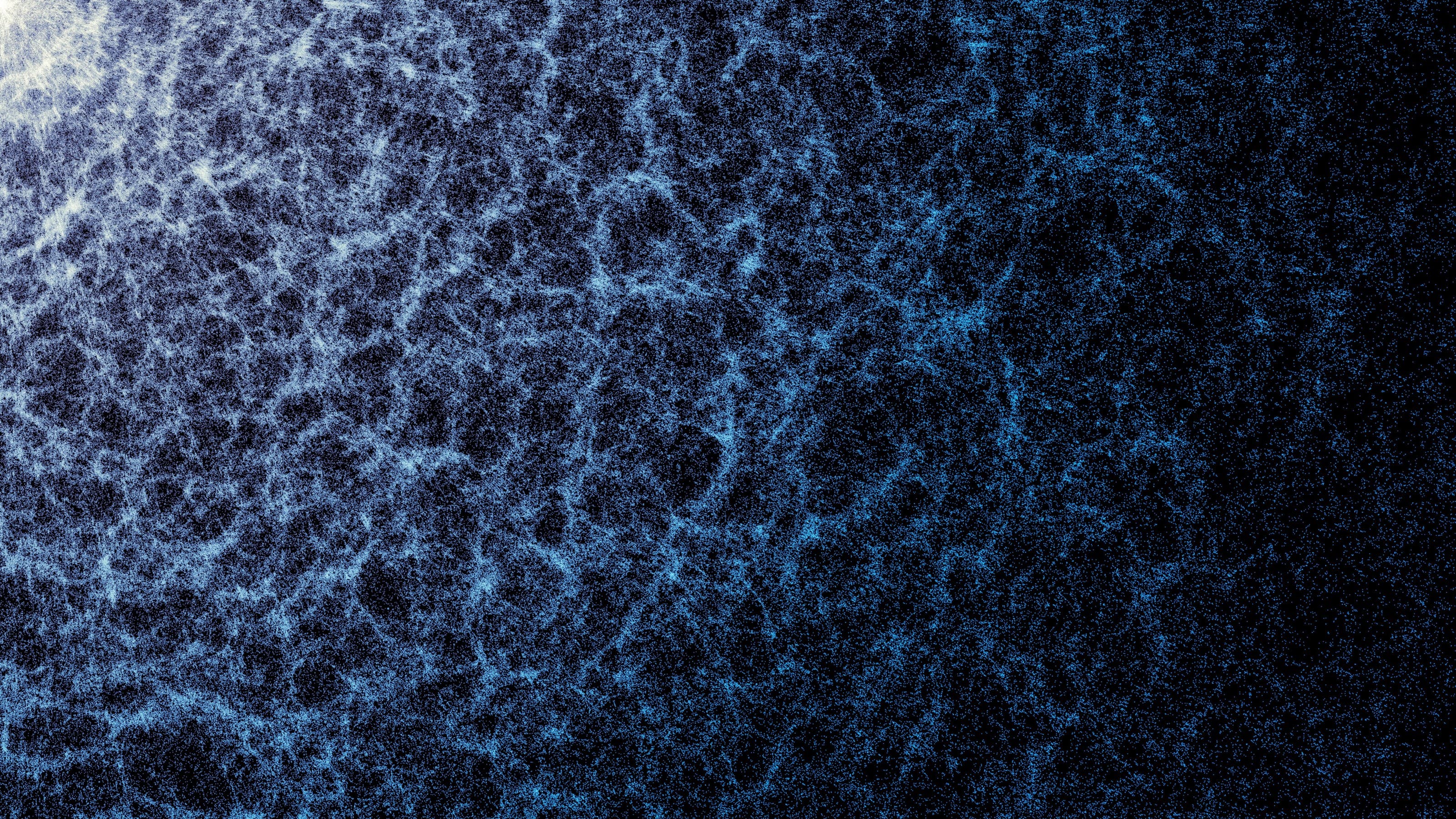
The neutrino mass mystery: a floor, a ceiling and three suspects
Experiments on Earth say neutrinos must weigh at least a certain amount. The newest map of the universe, combined with its oldest light, allows barely that much, or less. Nobody needs to be lying, but some assumption has to give.
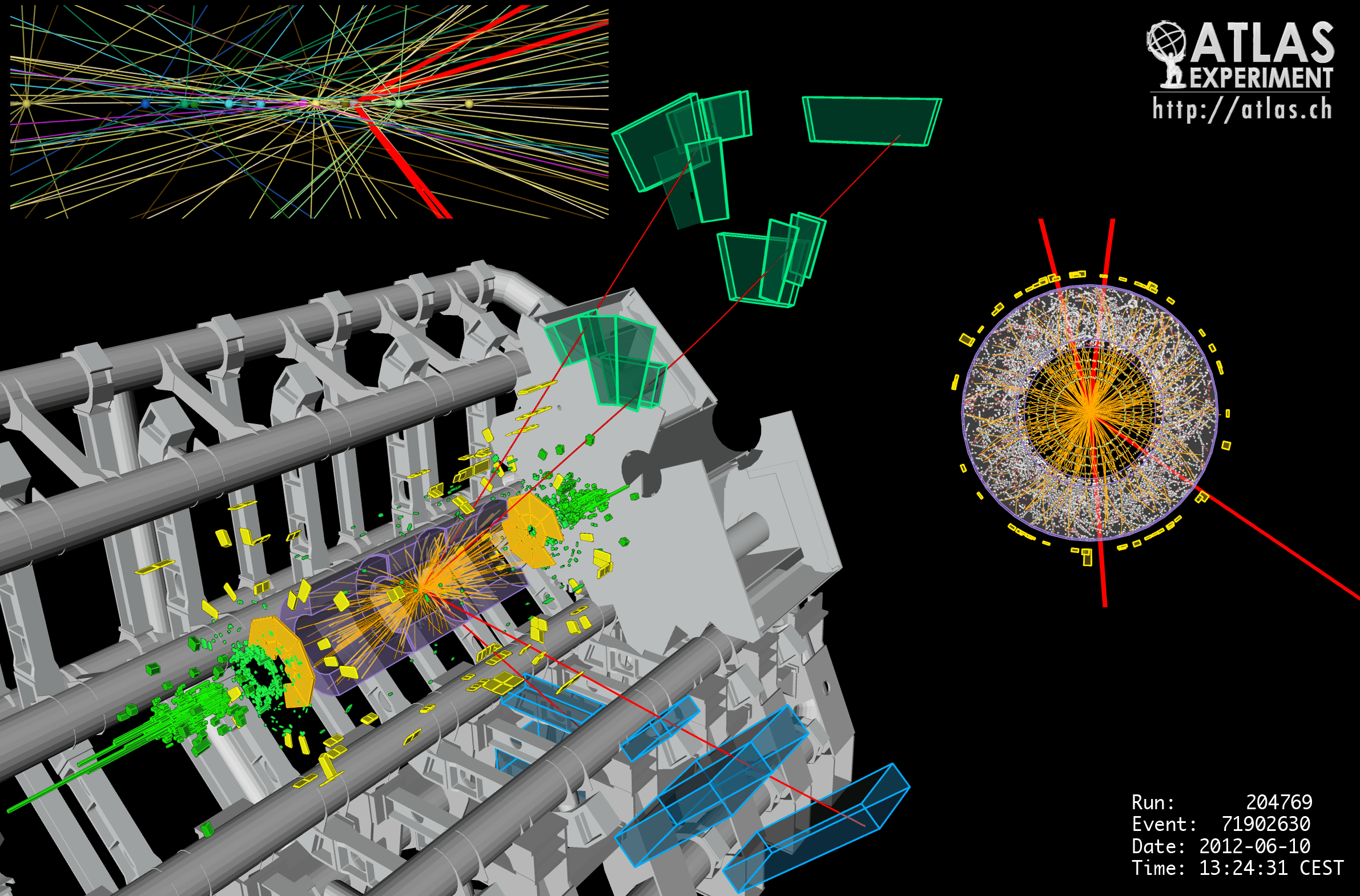
What “five sigma” really means — and what it doesn’t
Particle physicists reserve “discovery” for five sigma: a bump chance alone would make about once in 3.5 million tries. What that measures, why it isn’t “99.99997% sure,” and how five-sigma results still went wrong.
Key concepts
- neutrino
- An electrically neutral, extremely light particle that comes in three types and passes through almost all matter without leaving a trace.
- neutrino oscillation
- The way a neutrino created as one type can later be caught as a different type, which only happens if neutrinos have mass.
- weak interaction
- One of nature’s four basic forces: the only one that can turn one kind of particle into another, and the only way neutrinos can affect ordinary matter.
- electronvolt
- A tiny unit of energy, the energy one electron gains when pushed by one volt, handy for measuring the energy of single particles of light.
Other topics: Statistics of Discovery · Quantum · Relativity · Cosmology · Spaceflight